
Trade Agreements
- Home

- Global Marketplace
- Trade Agreements
- Interim EPA
Interim Economic Partnership Agreement (EPA) with the European Union (EU)
Interim EPA
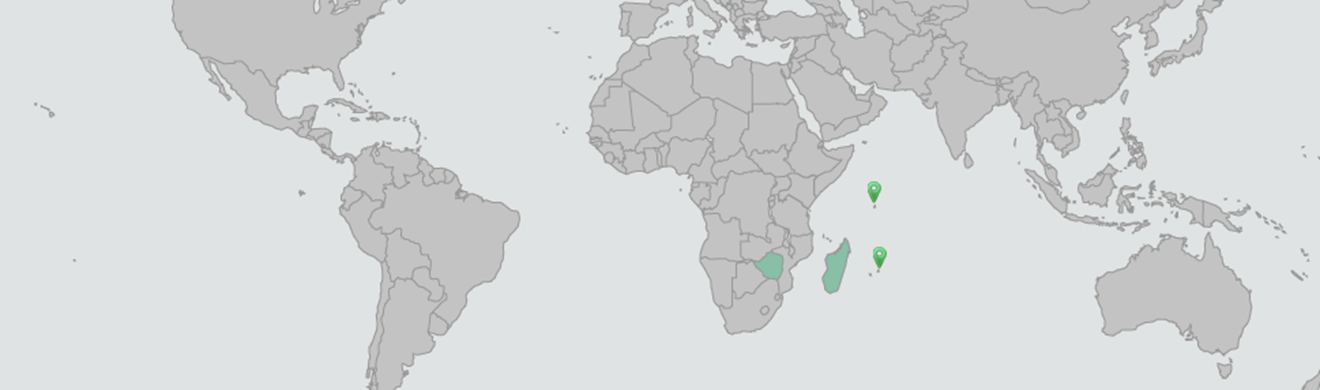
On 29th August 2009, the following four Eastern and Southern African (ESA) countries signed an interim EPA with the European Commission: Mauritius, Madagascar, Seychelles and Zimbabwe. The Union of Comoros joined the ESA Member States and ratified the interim EPA in January 2019.
The Agreement
- Interim Economic Partnership Agreement
- Annex II - Rules of Origin for exporting on a duty free basis to the EU
- Annex IIa - Agreed list of products with more flexible rules of origin
- EPA-Mauritius Tariff Liberalisation Schedule
Exporting to the European Union
Duty Free and Quota-Free Access to the European Union : Mauritian exporters consigning their goods to the European Union benefit from duty-free and quota free access to the EU.
Rules of Origin : The exporter must ensure that his products satisfy the Rules of Origin. The EPA Rules of Origin are product specific and complete information on the Rules is available in Annex II and Annex IIa.
Obtaining a Certificate of Origin : The EUR1 Certificate of Origin (CoO) is issued and approved by Customs Department of the Mauritius Revenue Authority. More information on the EUR1 CoO can be obtained from the Customs Department:
Mauritius Revenue Authority
Customs Department
Customs House
Mer Rouge
Port-Louis
Tel: (230) 202 0500
Fax: (230) 216 7784
Email: customs@mra.mu
Website: www.mra.mu
The online application for the EUR1 CoO can be made via the TradeNet System.
Scanned copies of the following documents are required for obtaining the Certificate of Origin:
1. Export Declaration
2. Export Invoice
3. Documentary evidence for raw materialsused (such as Import Declaration, Purchase Receipts, etc)
4. Costing Certificate signed by a Certified Accountant (if applicable)
5. Any other relevant information as may be required by Customs
Importing from the European Union
Imports entering Mauritius from the European Union with a valid EUR1 certificate benefit from preferential tariff treatment. The 3 lists below detail the concessions made by Mauritius to the European Union:
- List of Products that have been liberalised since 1st January 2013
- Liberalisation Schedule for Intermediate Goods
Useful Links
Australia
June 1995
Australian Chamber of Commerce and Industry (ACCI)
Austria
September 2014
Austrian Federal Economic Chamber
China
April 1997
China Council for the Promotion of International Trade (CCPIT) - Beijing
China International Economic and Trade Arbitration Commission - Shanghai
November 1998
CCPIT Guangdong Sub-Council
September 2008
CCPIT Qingdao
May 2007
CCPIT Qingdao
Comores
April 2017
L´Union des Chambres de Commerce, d´Industrie et d´Agriculture
Djibouti
August 2008
Chamber of Commerce of Djibouti
Estonia
September 2015
Estonia Chamber of Commerce and Industry
France
September 1996
l’Assemblée des Chambres Françaises de Commerce et d’Industrie (ACFCI)
India
November 1985
Federation of Indian Chambers of Commerce and Industry (FICCI)
May 1996
Confederation of Indian Industry (CII)
June 1995
Tamil Nadu Chamber of Commerce and Industry
January 2004
India International Trade Center
May 2004
Seafood Exporters Association of India
October 2005
Seafood Exporters Association of India
Kenya
January 2011
The Kenya National Chamber of Commerce and Industry (KNCCI)
Madagascar
November 2004
Fédération des Chambres de Commerce, d’Industrie, d’Artisanat et d’Agriculture de Madagascar
Malaysia
August 1994
The National Chamber of Commerce and Industry of Malaysia
June 2005
Malaysian Associated Indian Chambers of Commerce and Industry
Mozambique
September 2012
Chamber of Commerce of Mozambique
Nigeria
June 2019
Nigeria Association of Chambers of Commerce and Industry, Mines and Agriculture
Pakistan
October 2004
The Federation of Pakistan Chambers of Commerce and Industry (FPCCI)
Réunion
June 1995
Chambre of Commerce and d’Industrie de la Réunion
March 2002
L’Association pour le Développement Industriel de la Réunion
Russia
May 2007
Chamber of Commerce and Industry of the Russian Federation
Seychelles
November 2005
Seychelles Chamber of Commerce and Industry
April 2014
Seychelles Chamber of Commerce and Industry
Slovakia
September 2018
Slovak Chamber of Commerce and Industry (SCCI)
South Africa
September 2016
South African Chamber of Commerce and Industry
Sri Lanka
May 2004
National Chamber of Commerce of Sri Lanka
Taiwan
September 2017
Taiwan External Trade Development Council
Tanzania
January 2011
The Tanzania Chamber of Commerce, Industry and Agriculture (TCCIA)
Thailand
August 2004
The Federation of Thai Industries (F.T.I)
February 2013
TUSKON
Turkey
August 2014
DEIK (Foreign Economic Relations Board)
TOBB (The Union of Chambers and Commodity Exchanges of Turkey)